



EU PPWR


Simplify EU PPWR compliance with software built for packaging data management
Complying with the EU Packaging and Packaging Waste Regulation (PPWR) requires organizations to manage complex packaging data across suppliers, materials, products, and reporting systems. Many companies still rely on disconnected spreadsheets, siloed teams, and manual supplier outreach. This makes it difficult to maintain accurate packaging records, validate supplier data, and support audit-ready technical documentation.
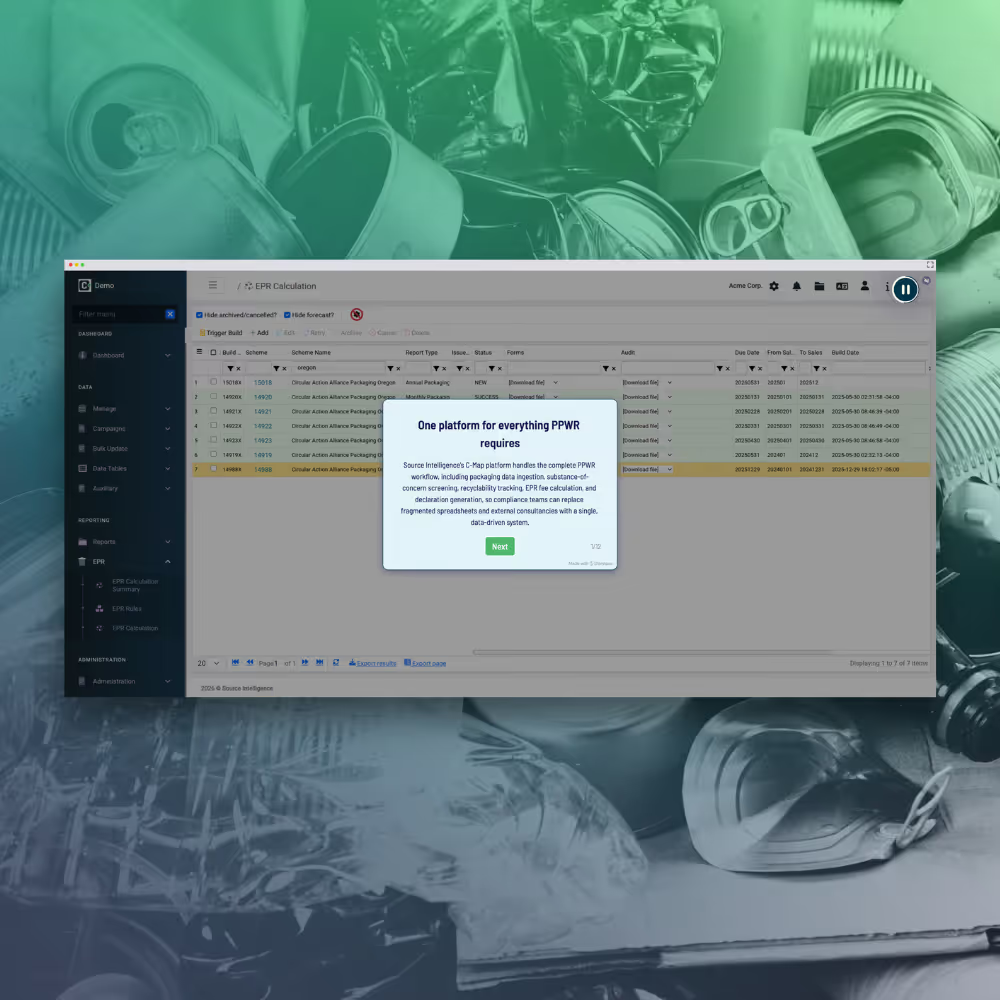
As EU PPWR requirements become more detailed, harmonized, and data-driven, organizations need a scalable approach to packaging compliance. PPWR compliance software helps centralize packaging data management, automate supplier engagement, and maintain defensible compliance records across the packaging lifecycle. Connecting compliance workflows across systems and teams helps organizations improve visibility, reduce operational risk, and prepare for evolving packaging requirements with greater confidence.
Core capabilities of our EU PPWR solution:
- Centralized packaging data management across systems and suppliers
- Automated supplier engagement and document generation
- Technical documentation and audit-ready compliance records
- Substance screening for REACH, PFAS, POPs, and CLP requirements
- Packaging BOM analysis, recycled content tracking, and design-for-recyclability visibility
Simplify EU PPWR compliance with software built for packaging data management
Complying with the EU Packaging and Packaging Waste Regulation (PPWR) requires organizations to manage complex packaging data across suppliers, materials, products, and reporting systems. Many companies still rely on disconnected spreadsheets, siloed teams, and manual supplier outreach. This makes it difficult to maintain accurate packaging records, validate supplier data, and support audit-ready technical documentation.
As EU PPWR requirements become more detailed, harmonized, and data-driven, organizations need a scalable approach to packaging compliance. PPWR compliance software helps centralize packaging data management, automate supplier engagement, and maintain defensible compliance records across the packaging lifecycle. Connecting compliance workflows across systems and teams helps organizations improve visibility, reduce operational risk, and prepare for evolving packaging requirements with greater confidence.
Core capabilities of our EU PPWR solution:
- Centralized packaging data management across systems and suppliers
- Automated supplier engagement and document generation
- Technical documentation and audit-ready compliance records
- Substance screening for REACH, PFAS, POPs, and CLP requirements
- Packaging BOM analysis, recycled content tracking, and design-for-recyclability visibility
The packaging data challenge behind EU PPWR
The EU PPWR introduces broader and more detailed requirements for packaging sustainability, recyclability, labeling, recycled content, and technical documentation across the EU market. The regulation is designed to: 1) create a more harmonized approach to packaging compliance, 2) reduce packaging waste, and 3) support the transition toward a circular economy.
Under the regulation, organizations must manage packaging data across multiple compliance workflows. This includes packaging composition, recyclability, recycled content, substance restrictions, labeling, and Extended Producer Responsibility (EPR) reporting. Businesses must also maintain technical documentation and compliance records that demonstrate packaging conformity across suppliers, materials, and finished products.
For many organizations, PPWR compliance is difficult to scale. Packaging data is often fragmented across procurement, packaging engineering, sustainability, compliance, and logistics teams. Supplier data may also be incomplete, inconsistent, or unavailable. This makes it difficult to maintain accurate packaging records and support audit-ready technical documentation.
As applicability deadlines approach, organizations relying on manual processes and disconnected systems face increasing operational and regulatory risk.
The packaging data challenge behind EU PPWR
The EU PPWR introduces broader and more detailed requirements for packaging sustainability, recyclability, labeling, recycled content, and technical documentation across the EU market. The regulation is designed to: 1) create a more harmonized approach to packaging compliance, 2) reduce packaging waste, and 3) support the transition toward a circular economy.
Under the regulation, organizations must manage packaging data across multiple compliance workflows. This includes packaging composition, recyclability, recycled content, substance restrictions, labeling, and Extended Producer Responsibility (EPR) reporting. Businesses must also maintain technical documentation and compliance records that demonstrate packaging conformity across suppliers, materials, and finished products.
For many organizations, PPWR compliance is difficult to scale. Packaging data is often fragmented across procurement, packaging engineering, sustainability, compliance, and logistics teams. Supplier data may also be incomplete, inconsistent, or unavailable. This makes it difficult to maintain accurate packaging records and support audit-ready technical documentation.
As applicability deadlines approach, organizations relying on manual processes and disconnected systems face increasing operational and regulatory risk.
Breaking down the operational requirements of EU PPWR
The EU PPWR introduces interconnected requirements across packaging design, recyclability, substance compliance, and technical documentation. Managing these obligations requires visibility into packaging materials, supplier data, reporting workflows, and packaging compliance data across the product lifecycle.
As PPWR compliance requirements continue evolving across the EU, organizations need a scalable way to manage packaging information, technical documentation, and supplier engagement across the supply chain. Key compliance obligations include:

Build a scalable foundation for EU PPWR compliance
Organizations need a centralized approach to collect, validate, and manage packaging data across suppliers, materials, products, and reporting obligations. They also need a reliable way to maintain technical documentation and demonstrate packaging conformity as requirements evolve across the EU.
PPWR compliance software from Source Intelligence helps organizations operationalize packaging compliance data across the supply chain. Our platform centralizes packaging compliance data, automates supplier engagement, and maintains audit-ready compliance records across packaging workflows. By connecting packaging, supplier, and compliance data within a single system, teams can improve visibility, reduce manual effort, and respond faster to changing regulatory requirements.
Our platform also supports key operational areas tied to EU PPWR, including packaging BOM analysis, recycled content tracking, substance screening, technical documentation, and EPR reporting workflows. This helps organizations move beyond fragmented compliance processes and build a more scalable approach to packaging sustainability and regulatory compliance.
Turn packaging data into scalable compliance workflows

Improve packaging data visibility
Centralized packaging datamanagement provides a more complete view of packaging composition, materials,and recyclability, along with other sustainability metrics.
Reduce manual supplier outreach
Automated workflows streamline supplier engagement and technical specification data collection, helping teams reduce manual follow-up and improve response efficiency.
Strengthen audit readiness
Centralized records and technical documentation support more consistent, defensible compliance workflows across packaging materials and suppliers.
Identify compliance risks earlier
AI-driven validation and substance screening help organizations identify packaging compliance gaps, restricted substances, and missing supplier data faster.
Why choose Source Intelligence?


Educational resources

EU PPWR: What Companies Must Do to Comply


Arla Foods Recovers $1M+ in Overpaid EPR Packaging Fees

Recorded Webinar: Navigating the PPWR

Software solutions to fit your needs




Turn packaging data into scalable PPWR compliance

Events and news
See for yourself
